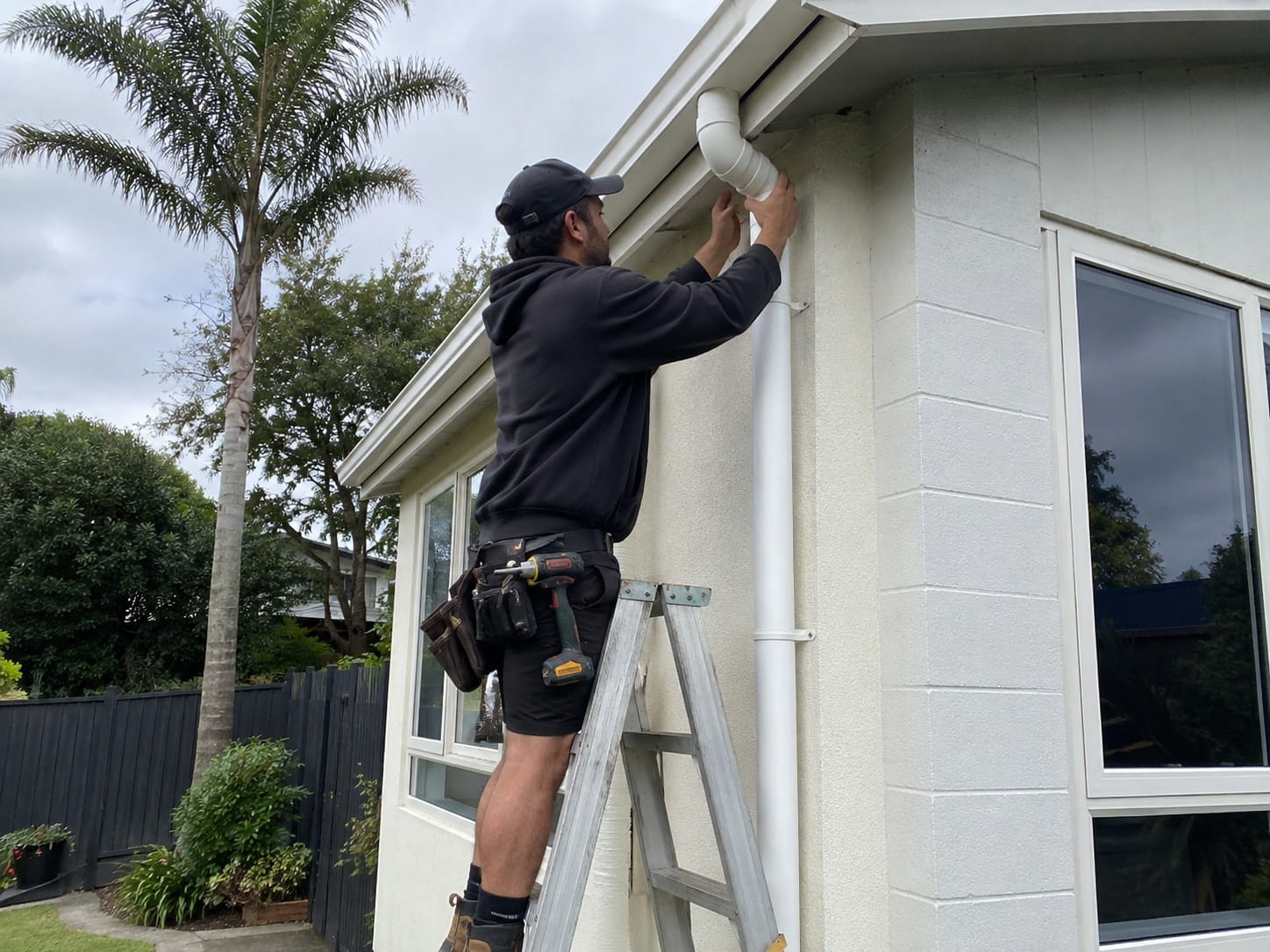
Whangarei Downpipe Installation
Your property needs properly positioned downpipes to manage water effectively. We install downpipes throughout Whangarei to correct specifications, ensuring efficient water flow away from your home's foundation and structure.
Downpipe Installation Whangarei
Gutters get all the attention, but it's the downpipes that decide where thousands of litres of roof water actually end up. Too few of them, or ones undersized for the roof area above, and your spouting fills faster than it can drain. The overflow finds fascia, cladding and garden beds, and through a wet Northland winter that means damp walls, boggy lawns and water sitting exactly where you least want it — against the foundations.
Getting that right is the whole point of downpipe installation in Whangarei. We work out how much roof each outlet has to carry, position pipes where the water actually wants to go, and connect them properly into your stormwater or tank system. Done well, you stop noticing them entirely — which is exactly the idea. We'll also flag any spouting repairs needed first.
Gutters Overflow Even When Clean
If your spouting spills over in heavy rain despite being completely clear, the problem is capacity rather than blockage. Another outlet, or a larger pipe on the existing one, gives that water somewhere to actually go.
Not Enough Outlets for the Roof Area
There's a straightforward relationship between roof area and how many downpipes it needs to drain properly. Long runs of guttering feeding a single outlet will always struggle once the rain really sets in. Adding a second outlet is usually cheaper than replacing the whole run.
Water Pooling Beside the House
Puddles that linger against the wall after rain usually trace back to a downpipe discharging straight onto the ground. Piping it properly into stormwater keeps that moisture well away from your foundations and subfloor.
New Extensions or Reroofing Work
Adding a room, a deck roof or a carport changes how much water the existing system has to carry. Fitting new outlets at the same time saves revisiting the whole job a winter later.
Rusted or Split Existing Pipes
Old galvanised pipes eventually rust through at the seams and joints, usually where they're hardest to see. Once that starts, replacement is better value than patching a pipe that will fail again somewhere else.
Adding a Rainwater Tank
Feeding a tank means routing at least one pipe through a leaf trap and a first-flush diverter in the right order. Planning that from the start avoids awkward plumbing bolted on as an afterthought.
Our Downpipe Installation Services in Whangarei
Every property drains differently, so here's what we look at before a single bracket goes on the wall.
Roof Area and Flow Calculations
We work out the catchment each outlet has to handle before quoting, so pipe sizes and spacings suit your actual roof rather than following a rough rule of thumb that fails in the first storm.
Round and Rectangular PVC
PVC downpipes are light, cost-effective and available in colours that match most spouting profiles. They suit the majority of homes around the district and are simple to replace if one gets damaged later. Most colour ranges are held locally, so lead times stay short.
Colorsteel and Coated Steel
Where appearance matters or exposure is severe, steel downpipes in matching colours stand up to knocks, mowers and coastal weather far better than plastic alternatives manage over the same period. They also hold a straighter line over long vertical runs.
Stormwater Connections
An outlet is only as good as where it drains to. We connect into existing stormwater, soak pits or channels so discharge is controlled and directed rather than simply dumped at the base of the wall.
Rainwater Tank Plumbing
Diverters, leaf traps and tank inlets all need to sit in the correct order to work as intended. We plumb the run so your tank fills cleanly and the overflow goes somewhere sensible. Getting that sequence right is what keeps sediment out of your tank.
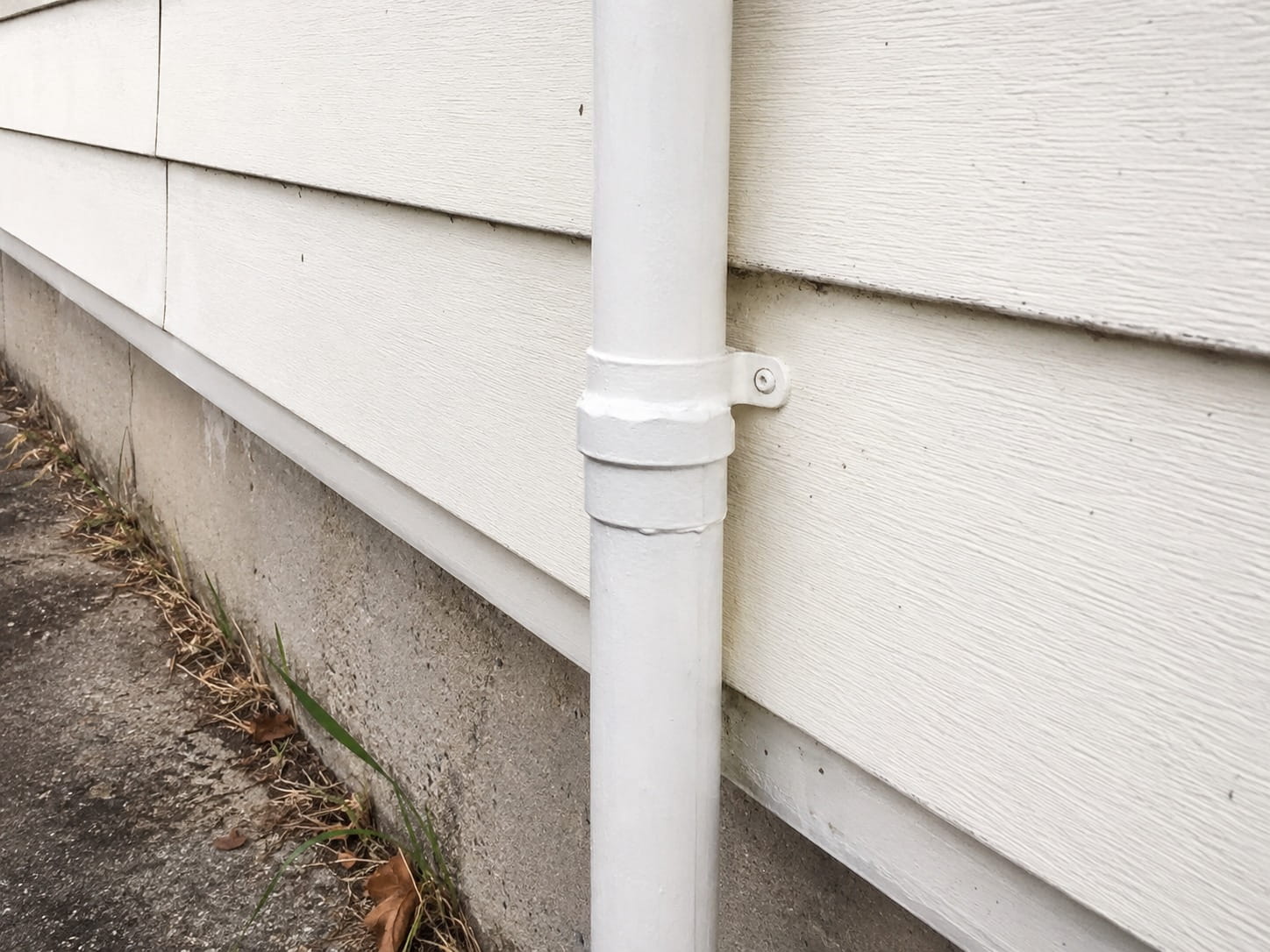
Brackets, Clips and Fixings
Pipes that rattle loose in wind eventually crack at the joints and pull away from the wall. We fix at correct spacings into solid substrate, using fittings suited to your particular cladding type. Every penetration through the cladding is sealed as we go.
Why Choose Our Downpipe Installation Contractors in Whangarei
Sized for Northland Downpours
A system designed around average annual rainfall falls over here. We size outlets for the short, intense downpours Northland actually delivers, because that's the day the system either copes or doesn't. Undersized outlets are the most common fault we're asked to correct.
Neat, Considered Placement
Downpipes stay visible from the street for the life of the house, so where they land matters. We position them where they drain well and still sit tidily against corners and cladding lines. Small decisions like that stop a house looking patched together.
One Crew for the Whole System
The same team that installs and repairs roofs handles your pipework, so flashings, spouting and outlets get treated as one connected system instead of three separate trades blaming each other. It also means one point of contact if anything needs adjusting later.
Materials That Suit the Site
Coastal properties, sheltered valleys and exposed hilltops all wear pipework at completely different rates. What we recommend depends on where your home actually sits, not on what happens to be cheapest. A pipe that lasts twenty years inland might last eight near the water.
Clear, Itemised Pricing
Your quote covers pipe, fittings, brackets, connections and labour up front. If we uncover a stormwater problem while digging, you hear about it and approve the cost before any extra work starts. Nothing goes in the ground without you knowing what it costs.
Tidy Site, Proper Finish
Penetrations get sealed, offcuts get taken away and any disturbed ground is put back as we found it. The job isn't finished until the site looks like nobody was ever there. We'd rather spend the extra half hour than leave you tidying up.
DIY vs Hiring Whangarei Downpipe Installation Specialists
Fitting a pipe looks simple enough. Here's where the difference actually shows up.
Sizing and Placement Decisions
Guessing at outlet numbers is the most common mistake we're called out to fix. An under-capacity system looks perfectly fine until the first real storm, then overflows exactly where you didn't want it. By then the damage is usually to your cladding, not the pipe.
Cutting Into Existing Spouting
Adding an outlet means cutting a clean opening and sealing it properly against the flow. A rough cut leaks at the joint and quietly rusts the surrounding steel from the inside out. Those failures typically show up two or three winters later.
Stormwater and Council Rules
Discharge has to go somewhere legitimate, not just off your boundary. Connecting incorrectly can create genuine problems for a neighbour and awkward questions during a future property sale or inspection. We check where your existing system runs before quoting anything.
Working Above Ground Level
Fixing brackets at height while managing a three-metre length of pipe is awkward, unbalanced work. Without proper access equipment it's one of the easier ways to come off a ladder. Two people and a platform turn it into a straightforward job.
Fixings Into Cladding
Drilling weatherboard, brick or plaster without the right fixings and sealant invites water in behind the cladding. That's a far dearer problem to put right than the pipe itself ever was. Framing repairs behind cladding are rarely a small piece of work.
Long-Term Value
A properly specified system runs for decades without needing any attention at all. A DIY run that overflows or works loose usually gets pulled off and redone within a couple of seasons anyway. Paying once is almost always the cheaper of the two routes.