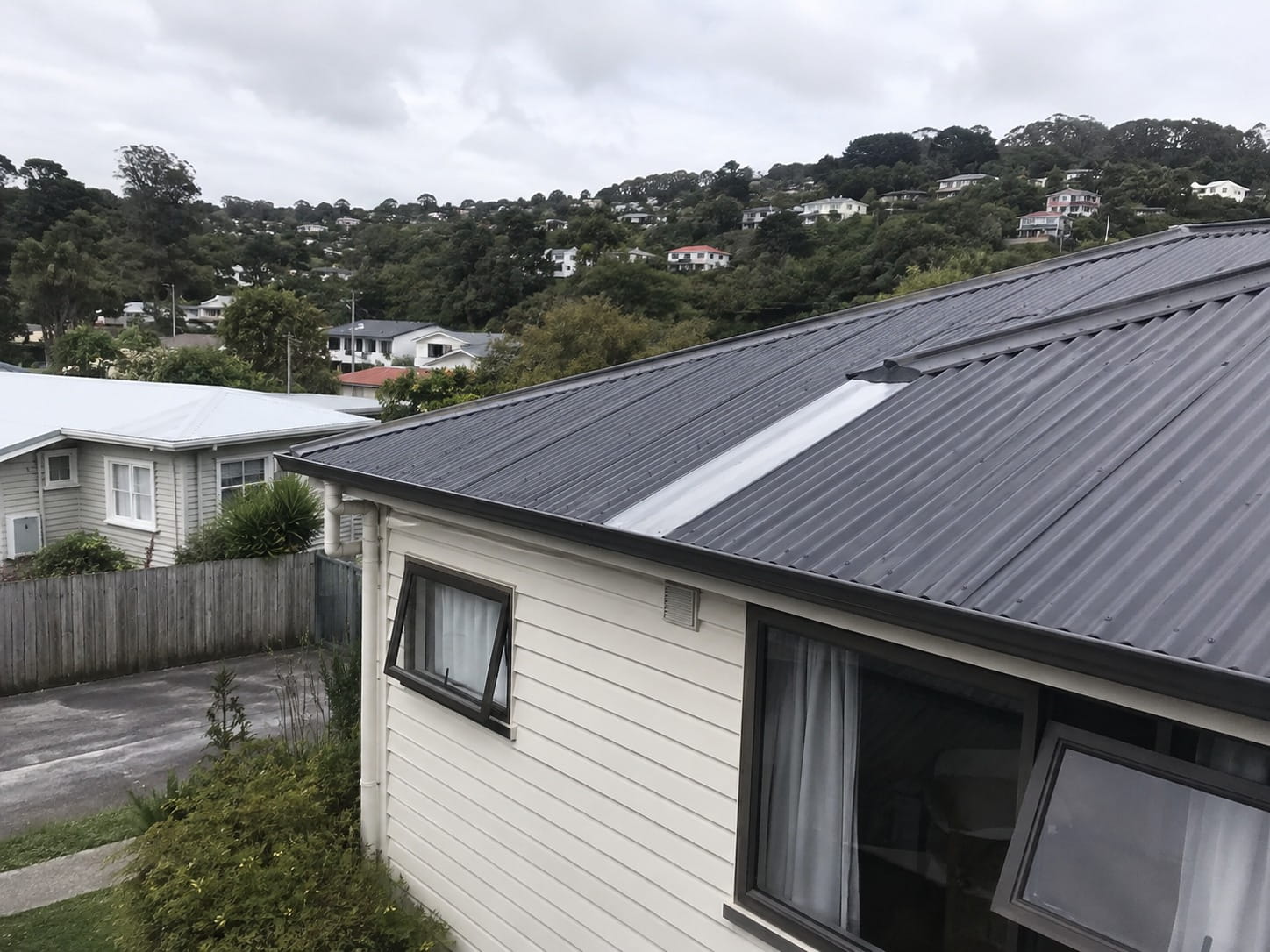
Whangarei Flashing Repair
Your roof's flashing is often the first point of leak failure. We repair and replace flashing across Whangarei properties, sealing vulnerable joints properly to keep water out and your roof protected.
Flashing Repair Whangarei
Most roof leaks don't start in the roofing at all. They start at the joins — where a chimney meets the tiles, where two roof planes run into a valley, around a vent pipe or a skylight. Those junctions are covered by flashings, and when one lifts, corrodes or loses its seal, water slips underneath and travels along the framing before it appears on your ceiling, often several metres from the actual fault.
That's the kind of problem flashing repair in Whangarei is built to solve. Our roofers trace the leak back to the junction that's failing, refit or replace the flashing so it sheds water the way it was designed to, and check the neighbouring details while they're up there. Fixing the join properly is nearly always cheaper than repairing the ceiling below it, and most repairs are done inside a day.
Stains Around a Chimney or Skylight
Ceiling marks near a penetration are the classic sign of a flashing problem. The roofing itself is often perfectly sound — it's the join around it that has stopped keeping water out. Replacing a chimney flashing is far cheaper than replacing a ceiling.
Rust Streaks Along a Valley
Valleys carry more water than any other part of a roof, sometimes several roof planes' worth. Corrosion or a lifted edge there will leak long before the rest of the roofing shows its age.
Lifted or Loose Metal Edges
Flashings that have pulled away from the wall or the roof line let wind drive rain straight in underneath. It's usually visible from the ground once you know what to look for. A pair of binoculars from the lawn will often confirm it.
Failed Sealant and Cracked Mortar
Old sealant goes hard and shrinks away from the metal it was holding, and chimney mortar cracks with seasonal movement. Either one creates a direct path into the roof space. Sealant was never meant to be the primary weather barrier anyway.
Leaks Only in Driving Rain
A leak that shows up in a southerly but stays dry in ordinary rain points squarely at a flashing detail rather than a hole in the roofing sheet itself. That pattern is one of the more useful diagnostic clues we get.
Patch Repairs That Keep Failing
Layers of sealant over a flashing are a sign someone treated the symptom instead of the cause. Once patches start failing repeatedly, the flashing underneath needs replacing properly. Each new layer traps water against the metal a little longer.
Our Flashing Repair Services in Whangarei
Every junction on a roof has its own detail. These are the ones we're called to most.
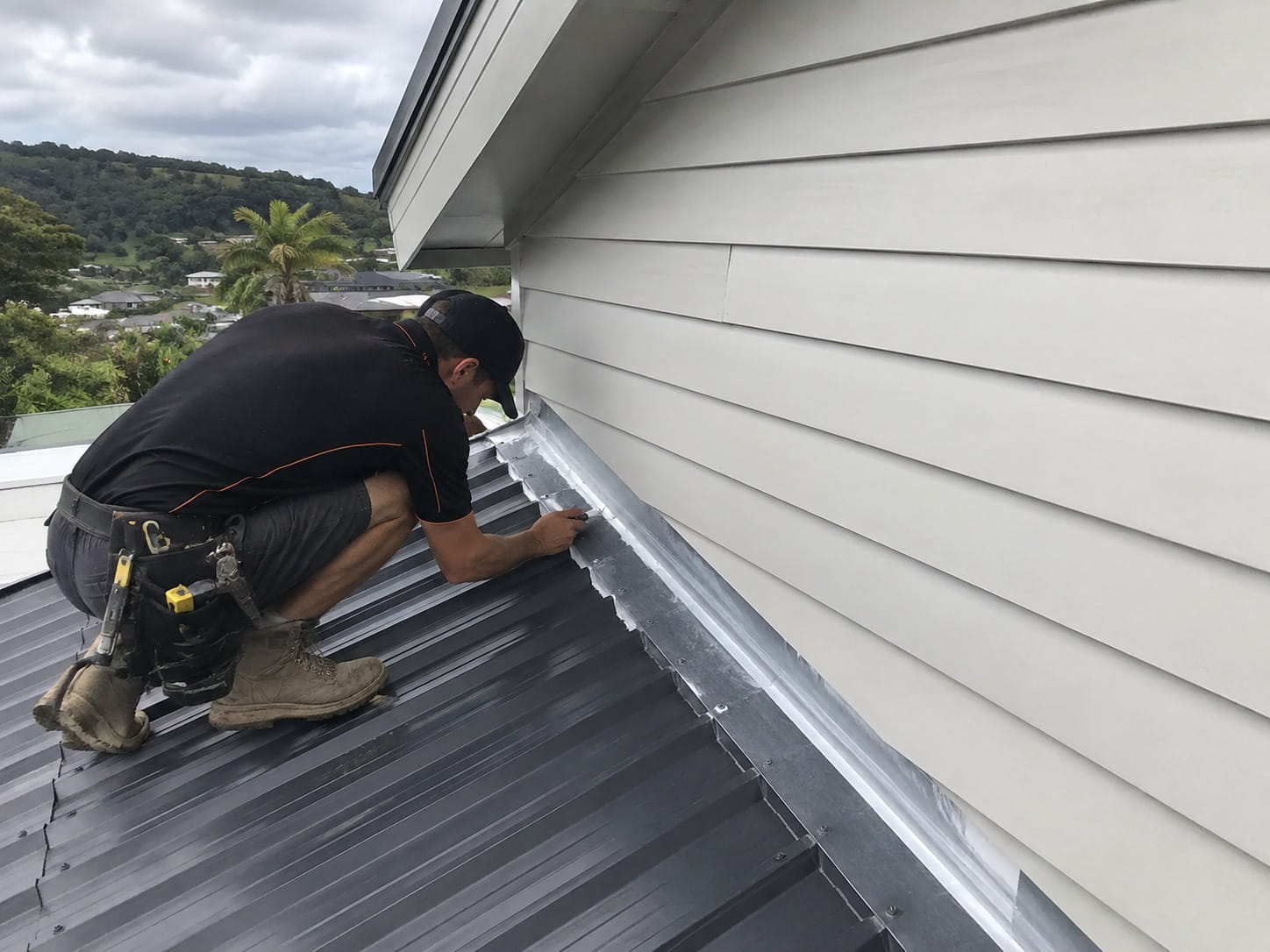
Leak Tracing and Diagnosis
We work back from where the water shows inside to where it actually enters, using flow testing rather than guesswork, so the repair addresses the real entry point instead of the nearest one. Guesswork is what turns one repair visit into three.
Chimney and Wall Flashings
Apron, step and cover flashings are refitted or replaced and properly tucked in, so the junction between roof and vertical surface sheds water away instead of holding it against the wall. Correct cover and upstand heights are what make that detail work.
Valley Replacement
Corroded or undersized valleys get replaced in the correct material and profile, with the roofing reset over the top of them at the right coverage and fall for the pitch. Undersized valleys are common on older Whangārei homes with added extensions.
Penetration Flashings
Vents, pipes, aerials and solar mounts all need purpose-made collars sized to the penetration. We fit the correct detail rather than building up a mound of sealant around the base. A proper collar flexes with movement instead of cracking away from it.
Ridge, Barge and Apron Details
Ridge caps, barge flashings and aprons carry a lot of wind load on an exposed site. We refix at correct centres using fasteners and seals suited to coastal Northland conditions. Loose barge flashings are one of the first things a gale finds.
Skylight Surrounds
Skylight leaks are almost always at the flashing kit rather than the glazing unit itself. We reseal or replace the surround so the skylight performs the way it was designed to. Replacing the whole unit is rarely necessary once that's sorted.
Why Choose Our Flashing Repair Contractors in Whangarei
We Fix Joins, Not Symptoms
Sealant smeared over a failing flashing buys you a season at best. We repair the detail itself so water is directed away from the join rather than temporarily held back from it. That's why so many recurring leaks turn out to be old patches.
Right Materials for the Junction
Putting the wrong metals together corrodes a detail faster than the weather ever would. We match materials to your roofing and fixings so the repair doesn't create its own problem. Fastener choice matters just as much as the flashing material does.
Coastal Detailing Experience
Salt air attacks cut edges and fasteners first, well before anything else fails. Around Whangārei that changes how a flashing should be lapped, sealed and fixed if it's going to last. Details that work in Hamilton don't always survive a Northland coastline.
Building Code Standards
Flashing work sits squarely in Building Code territory, not in handyman territory. Ours is carried out to that standard and documented, which matters when you come to sell the house. Weathertightness questions come up more often than most owners expect.
Straight Answers on Scope
If a flashing can be refitted, we'll refit it and leave it there. If the roofing around it has reached the end of its life, we'll say so rather than sell a repair that won't hold.
Clean, Weathertight Finish
Repairs are finished so they look deliberate rather than patched — correct laps, tidy fold lines, and no smears of sealant left across your roof for the next owner to find. Good flashing work should be almost invisible from the ground.
DIY vs Hiring Whangarei Flashing Repair Specialists
Flashings are the detail most often patched by well-meaning owners, and the detail most often patched wrong.
Finding the Actual Entry Point
Water can travel several metres along a purlin before it finally drips through. Sealing the nearest suspicious-looking spot is exactly why so many DIY leak repairs fail within weeks. We follow the water rather than assuming where it came in.
Sealant Is Not a Flashing
Silicone across a gap looks like a fix and behaves like a delay. Flashings work by shedding water using laps and falls, not by being glued shut and hoped over. It also makes the eventual proper repair messier and more expensive.
Metal Work and Folding
Flashings are folded to suit the specific pitch and junction they sit in. Getting those angles even slightly wrong leaves gaps that wind-driven rain finds almost immediately. Pre-formed lengths from a merchant rarely match an older roof exactly.
Corrosion From Mixed Metals
Fixing copper against steel, or using the wrong fasteners, sets off galvanic corrosion at the join. The repair then fails considerably faster than the original detail ever did. The corrosion usually appears first at the fixing points themselves.
Working Around Fragile Details
Chimneys, skylights and valleys are the easiest places on a roof to crack a tile or dent a sheet. A patch attempt often creates the next leak a metre further along. Those are also the details that are hardest to put right afterwards.
Insurance and Weathertightness
A leak traced back to poor DIY work can complicate an insurance claim considerably, and it has a habit of resurfacing in a pre-purchase inspection years later. Keeping the paperwork for compliant work is worth more than the saving.