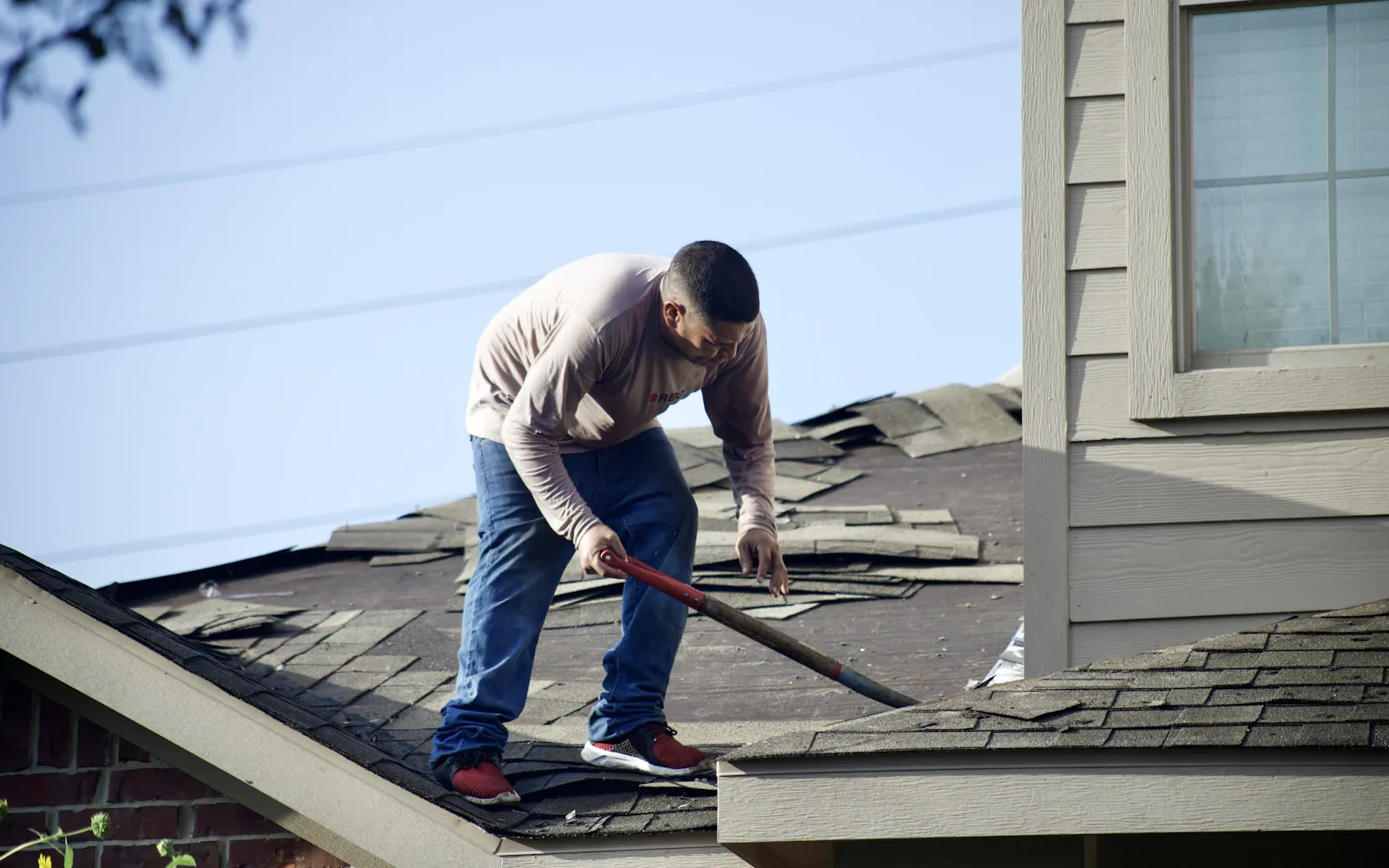
Two homeowners ring us about "a leak in the ceiling". One pays $380. The other pays $2,400. Neither has been treated differently — their roofs are just telling different stories. Here's what actually drives roof repair pricing, so you can read a quote properly instead of guessing.
Indicative ranges only. Repairs are priced on what we find, and nobody can price a leak accurately from a phone description. The figures below reflect typical Whangārei jobs.
The usual range
Most residential roof repairs land between $300 and $1,500 per visit. Small sealing and refixing jobs sit at the bottom. Replacing a section of roofing, rebuilding a flashing detail or working at height on a two-storey home sits at the top. Bigger jobs — a full valley replacement, several square metres of sheeting, storm damage across multiple areas — can run to $2,000–$4,000.
That's a wide spread, so let's break down what moves you along it.
1. How hard the fault is to find
This is the one that surprises people. Water rarely enters where it appears. It runs along a purlin, follows a rafter, and drips somewhere else entirely — sometimes metres away.
An obvious fault, like a cracked tile directly above a stain, is quick. A leak that only shows up in a driving southerly might take flow testing and a couple of hours of methodical work to pin down. That diagnosis time is real work, and it's the difference between fixing the cause and sealing the nearest suspicious-looking spot — which is why so many DIY patches fail within a season.
2. Access and height
A single-storey home with a walkable pitch and clear ground around it is the cheapest roof in Whangārei to repair. Add a second storey, a steep pitch, a deck in the way or a slope falling away from the house, and you've added edge protection, more setup time and sometimes scaffolding.
On a small repair, access can genuinely cost more than the repair itself. It's not padding — it's what makes the job legal and survivable.
3. What's actually failed
Not all leaks are equal. In rough order of cost:
- Resealing or refixing — replacing tired fasteners and seals. Usually the cheapest fix.
- Cracked or slipped tiles — quick, provided matching tiles can be sourced.
- Flashing failure — the most common leak source we see. Flashing repair around a chimney, valley or penetration ranges from straightforward refitting to fabricating and fitting new metal.
- Skylight leaks — nearly always the flashing kit rather than the glazing. Skylight repairs are usually mid-range unless the glazing unit itself has failed.
- Sheet or section replacement — more material, more labour, and profile matching matters.
- Structural repairs — rotted purlins or decking discovered under the leak. This is the one that escalates.
4. Hidden damage
By the time water shows on a ceiling, it's been in the roof space for a while. Sometimes the timber underneath is fine. Sometimes it's soft, and repairing the roofing without addressing that is pointless.
A good quote handles this honestly: a price for the visible repair, and a stated rate if we open it up and find more. Nobody enjoys that conversation, but it beats a fixed price that quietly assumes the best case.
5. Matching existing materials
Older homes around Regent, Raumanga and Mairtown often wear profiles or colours that aren't on a shelf anywhere. Sourcing a close match takes time, and occasionally the honest answer is that a visible patch is unavoidable. That's a conversation worth having before the work starts, not after.
6. Urgency
A booked repair on a dry Tuesday is the cheapest version of any job. A callout at 9pm mid-storm with water coming through a ceiling is not, and shouldn't be — you're paying for a crew turning out in the dark in bad conditions with proper gear.
Emergency roof repairs are usually two jobs: make-safe now, permanent repair once it's dry. Budget for both. The make-safe visit is what keeps the damage confined to the roof rather than spreading to ceilings, insulation and flooring — which is a far larger bill.
7. Coastal exposure
Out at Whangārei Heads, Parua Bay or Marsden Point, salt air attacks cut edges and fasteners first. A repair here often means replacing corroded fixings across a wider area than the leak itself, because patching one spot on a roof whose fasteners are all going is just booking the next visit.
8. How many separate problems there are
Fixing three faults in one visit costs far less than three visits. If you've noticed a slow drip, a rattling downpipe and moss building up on the shaded slope, mention all of it when you book. Setup and access are the fixed costs — the marginal cost of the second and third job while we're up there is small.
When repairs stop being the right answer
There's a point where repair money is money burnt. Rough guide: if you've paid for two or more repairs in two years on the same roof, or if rust and failed fixings are visible across the whole roof rather than in one area, get a reroofing quote alongside the repair quote.
Sometimes the answer is neither. If the roof is structurally fine but looks tired and is starting to leak at the details, roof restoration can be a middle path — repairs plus a clean and protective coating for well under a full replacement.
How to keep repair bills down
Almost every expensive repair we attend started as a cheap one that nobody dealt with. The maintenance that genuinely pays for itself:
- Spouting cleaning once or twice a year. Blocked gutters push water back under the roof edge — one of the most common causes of "roof" leaks that aren't roof leaks at all.
- Deal with moss early. Moss and lichen treatment stops growth holding moisture against the surface, which is what accelerates corrosion.
- Check the flashings after big storms. A lifted edge spotted from the ground is a cheap fix. The same edge found by a wet ceiling is not.
- Don't ignore a small stain. Ceiling marks don't get better on their own.
Getting a repair quote worth comparing
Ask what the diagnosed cause is — not just what will be done. If a roofer can't tell you where the water is entering and why, they're guessing, and you'll be paying again. A proper roof repair quote names the fault, the fix, the materials, and what happens if there's more underneath.