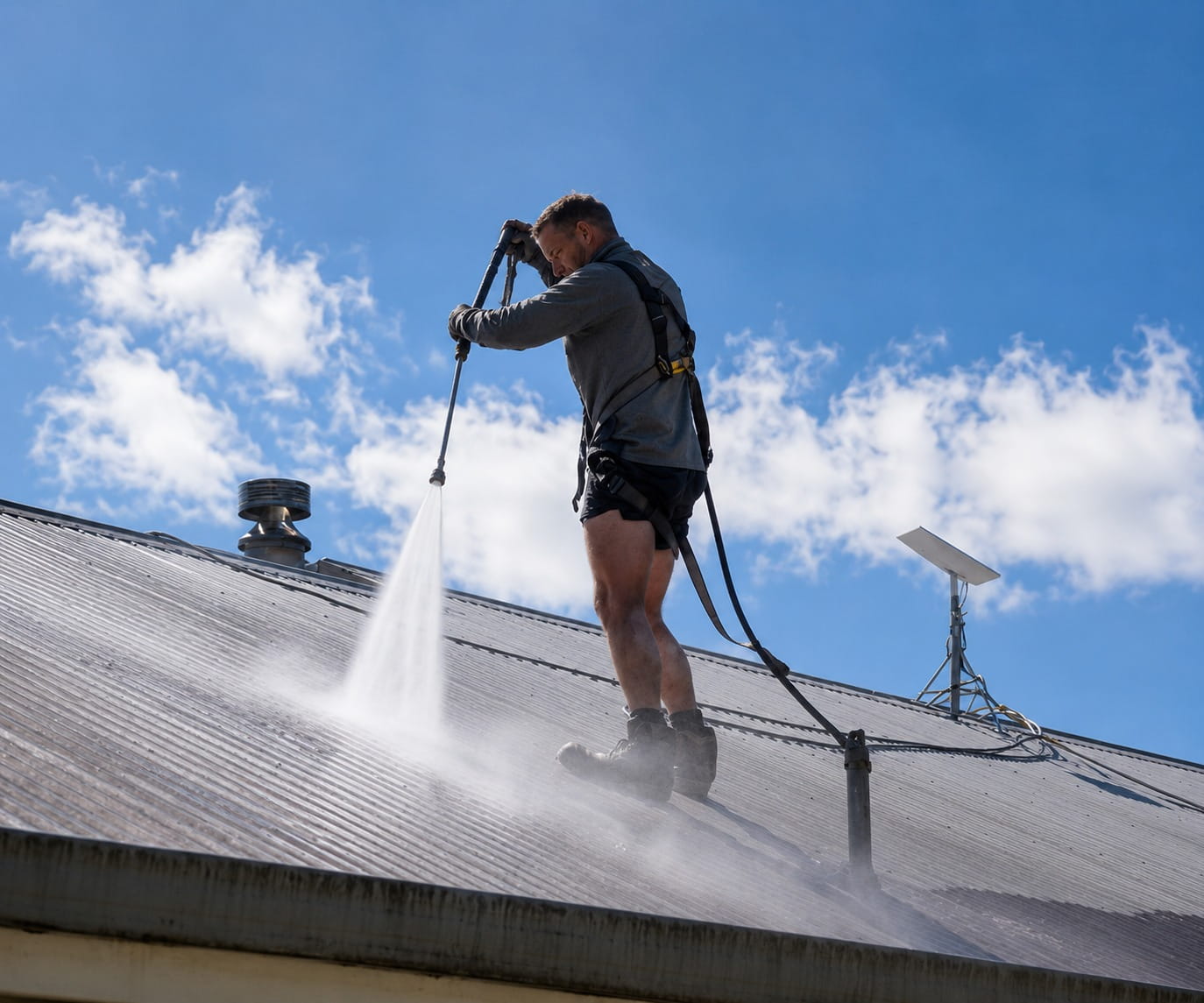
Whangarei Roof Cleaning
Your roof accumulates dirt, debris, and growth over time, affecting its condition. We provide thorough roof cleaning services across Whangarei, removing buildup safely while extending your roof's overall lifespan.
Roof Cleaning Whangarei
Roofs collect more than most people realise. Salt off the coast, dust from the road, tree sap, bird mess and a slow film of grime all settle into the surface and dull it years before the material itself is anywhere near worn out. On a light-coloured roof it shows up as streaking down the sheets; on a dark one, as a chalky flatness that no amount of hosing seems to shift.
A proper roof cleaning in Whangarei resets all of that. We work across the whole surface at a pressure your roofing can safely take, lift the build-up rather than scouring it off, and clear the runoff out of the valleys and spouting afterwards. It's the cheapest way to make a tired roof look cared for again, and we'll tell you honestly what a wash will and won't fix.
Signs You Need Roof Cleaning In Whangarei
Streaking and Uneven Colour
Dark runs below the ridges and around fixings are usually surface build-up rather than any fault in the roofing itself. A wash generally brings the colour back close to where it started. Most owners are surprised how much colour is still under there.
Salt Film on Coastal Homes
Properties near the water carry a constant salt deposit across the roof. That film holds moisture against the steel and quietly speeds up corrosion around cut edges and fixings. Rinsing that film off regularly is genuinely preventive maintenance, not cosmetics.
Preparing to Paint or Recoat
No coating bonds properly to a dirty roof. A thorough clean is the first stage of any recoat, and skipping it is the most common reason fresh paint fails within a couple of years.
Selling or Refinancing
A clean roof changes how the whole house presents in listing photographs and from the street. It's a small spend measured against the impression it makes on buyers and valuers. Agents routinely suggest it before photographs are taken for a listing.
Debris Sitting in the Valleys
Leaf litter and grit collect where roof planes meet and hold water against the metal there. Clearing valleys properly protects the single most leak-prone part of any roof. Valleys are also where corrosion starts long before anywhere else does.
General Maintenance Intervals
Most roofs benefit from a wash every few years, coastal ones more often. Regular cleaning is what keeps a twenty-year-old roof looking like it still has plenty of life left in it. It's the cheapest line item in any roof's maintenance history.
Our Roof Cleaning Services in Whangarei
Every roof gets checked before it gets washed. Here's what a full clean covers.
Roof Condition Check First
Before any water goes on, we check the fixings, laps, flashings and general condition. Washing a roof that already has faults is one of the quicker ways to put water inside a house. Anything we find gets reported before we start, not afterwards.
Soft Wash for Coated Surfaces
Painted steel, concrete tile and membrane are all cleaned at controlled pressure with the right detergents, so the factory finish comes through the process completely intact. Detergent and dwell time do the work that pressure otherwise would.
Growth Treated, Not Scrubbed
Where moss or lichen has taken hold we treat it chemically instead of scouring the surface. Our moss and lichen treatment service covers badly affected roofs in more depth. Treating first and rinsing later protects the surface underneath.
Valley and Gutter Clear-Out
Everything we lift off the roof has to be caught and taken away. Valleys, spouting and downpipes are all cleared and flushed as part of the job rather than charged as an extra. A clean roof over a blocked gutter solves very little.
Skylights and Flashings by Hand
Glazing, flashings and vent penetrations are cleaned by hand, because a blaster in those spots forces water straight past the seals that are keeping the roof weathertight. Those seals are the last thing you want disturbed during a wash.
Access and Property Protection
Paths, decks, plants and vehicles are covered or rinsed as needed, and access is set up properly so nobody is balancing on a fragile roof sheet to reach the far side. Ten minutes of setup avoids an afternoon of apologising afterwards.
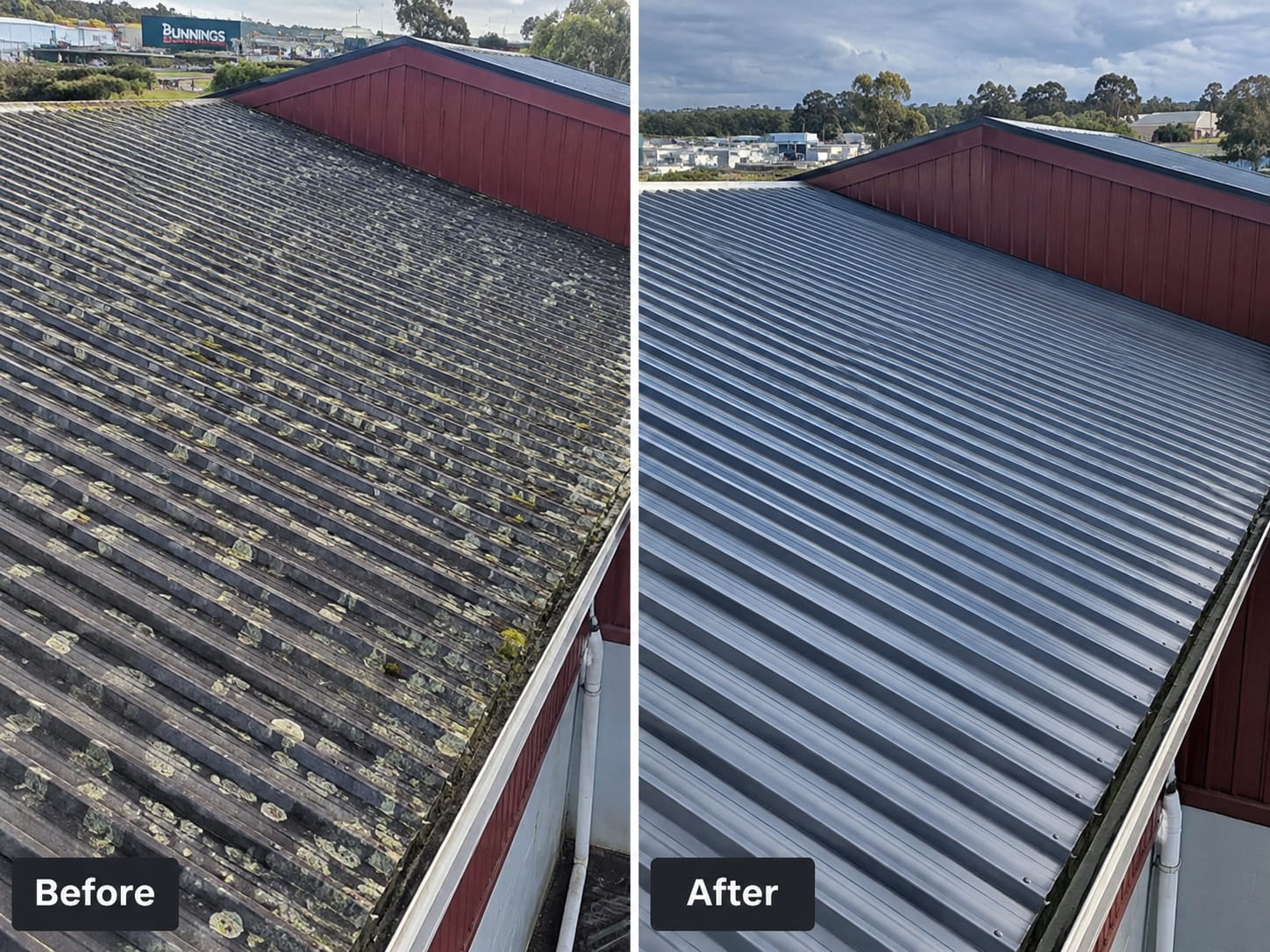
Premium Roof Cleaning Services in Whangarei
Your roof accumulates dirt, algae, and organic buildup constantly in Whangarei's humid coastal climate, quietly shortening its lifespan if left untreated. We provide premium roof cleaning services designed to remove grime, moss spores, and debris safely, without damaging your roofing material in the process. Beyond appearance, regular cleaning prevents moisture retention that leads to deterioration, rust, and costly repairs down the track. Our team uses appropriate techniques and equipment suited to your specific roof type, ensuring a thorough clean that protects your investment long-term. You get a roof that not only looks refreshed but performs better and lasts longer as a result.
Why Choose Our Roof Cleaning Contractors in Whangarei
Pressure Matched to the Material
The right pressure for concrete tile will wreck a decramastic roof in seconds. Knowing that difference is what separates cleaning a roof from quietly damaging one you'll pay to fix later. We identify the material before the gear comes off the truck.
We Look Before We Wash
A clean is a good opportunity to catch small problems early. You'll hear about a lifted flashing or a rusting screw while it's still a cheap thing to put right. You get photos and a plain explanation, with no pressure to act.
Coastal Roof Experience
Salt-laden roofs behave differently under a wash, and exposed cut edges need real care. We've cleaned enough of them around Whangārei to know exactly where the risks sit. Cut edges and fixings get checked as we work across the sheets.
No Water Where It Shouldn't Go
Forcing water up under laps and behind flashings is the classic roof-washing failure. We work with the direction of the roof's overlaps rather than against them. Direction of travel matters as much as pressure does on a roof.
Fixed, Honest Pricing
You get a price for the roof in front of us, including access difficulty and the clean-up afterwards, so there's nothing to adjust once we're already on site and working. Two-storey and steep-pitch access is priced in from the outset.
A Licensed Roofing Crew
This is carried out by roofers with height training and proper insurance, not by whoever happened to have a water blaster and a spare afternoon that particular week. The same crew handles repairs, so problems get spotted properly.
DIY vs Hiring Whangarei Roof Cleaning Specialists
Hiring a water blaster is easy. Using one on a roof without causing damage is the hard part.
Water Blaster Damage
Domestic blasters are more than powerful enough to strip coating, dent steel and drive water under the laps. The damage usually surfaces months later as a leak you can't place. Insurers and manufacturers both take a dim view of that damage.
Surfaces You Shouldn't Walk On
Old tiles crack, decramastic dents underfoot and aged fibre-cement can give way entirely. Knowing where weight can safely go matters just as much as the cleaning itself does. One cracked tile can undo whatever the clean was meant to achieve.
Where the Water Ends Up
Runoff carries grime, dead growth and detergent along with it. Managing where all that goes protects garden beds, tank supplies and the neighbour's driveway from the mess. Tank-fed properties need the inlet diverted before anything starts.
Detergents and Coatings
The wrong product can dull or discolour a painted roof permanently, and there's no undoing it afterwards. Trade cleaners are chosen for the specific coating they're going onto. Testing an inconspicuous area first is standard practice for us.
Height, Pitch and Fatigue
Cleaning is slow, repetitive work on a slope while dragging a pressurised hose around. Concentration slips after an hour or two, and that's usually the moment accidents happen. Working in pairs is how professional crews manage that fatigue safely.
The Finish You End Up With
Patchy DIY cleaning often looks worse than leaving the roof alone entirely, because the contrast draws the eye to every section you couldn't safely reach from the ladder. Consistency across the whole roof is what makes a clean look intentional.